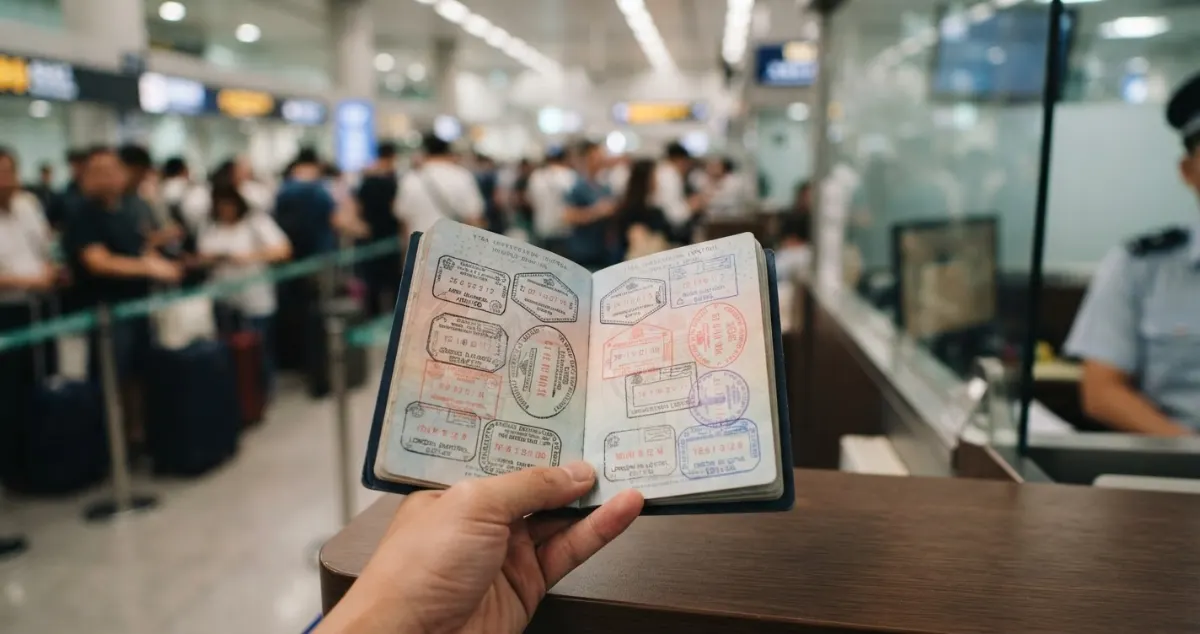
Visa runs are still legal in many places, but the safe version of them has shrunk. Thailand cut its visa-free stay from 60 to 30 days on 15 September 2026 and capped land-border entries, Europe’s Entry/Exit System now records every crossing, and officers in Mexico and Georgia are paying closer attention to repeat arrivals. This guide shows where visa runs work, where they are restricted, and what to do instead.
Last checked against official sources in October 2026.
Planning a long stay? Take the free WhereToNomad quiz to find a visa that replaces constant exits and re-entries.
What Visa Runs Are and Why They Matter
A visa run means leaving a country briefly and coming back to receive a fresh tourist stay. Nomads have used visa runs for years because the cost was a bus ticket or a cheap flight. The method was never a visa. It depends on an officer admitting you again each time, and officers decide that at the moment you arrive.
That discretion is the whole risk. A visa run is lawful when the country’s rules allow a new entry, but an officer can still refuse you if the pattern suggests you are living there without proper status.
Visa Runs in Thailand After 15 September 2026
Thailand changed the most. Four Interior Ministry notifications published in the Royal Gazette on 31 August 2026 took effect on 15 September 2026. According to the Royal Thai Embassy in Washington, nationals of 60 listed countries can enter visa-free for tourism for up to 30 days. Travelers admitted before 15 September keep the 60 days stamped in their passport.
- Extension: One extension of up to 30 days is possible at an immigration office, at the officer’s discretion. Industry guides cite a 1,900 baht fee.
- Funds: The embassy says to carry 20,000 baht per person or 40,000 baht per family.
- Land borders: The Royal Thai Embassy in London says eligible passport holders may enter visa-free only twice within a calendar year. Summaries based on Tourism Authority of Thailand updates say the cap applies at land checkpoints, with exceptions for Malaysian, Bruneian, Indonesian and Singaporean nationals, while airport arrivals have no fixed numeric cap, though repeated entries can still draw questions. Official sources describe the scope slightly differently, so confirm with Thai Immigration before frequent trips.
- Arrival card: The Thailand Digital Arrival Card is expected to feed entry and exit screening.
In practice, serial visa runs by land are now largely finished for most nationalities, and air visa runs depend entirely on the officer. The Destination Thailand Visa is the intended replacement, and our Thailand DTV guide covers it. Industry guides describe it as a five-year visa with up to 180 days per entry and a 500,000 baht funds test, but confirm the current process with your embassy.
Visa Runs Across Asia, Mexico, Georgia and Turkey
Indonesia and Bali. The visa on arrival gives 30 days and can be extended once for 30 more, so 60 days at most. Since mid-2025 the extension needs an in-person visit for photos and fingerprints. Enforcement has risen in 2026, with patrols monitoring foreigners who work on visitor permits, and overstays cost 1,000,000 rupiah a day. Sources we reviewed do not say that repeated visa runs are banned, but working on this permit can bring detention, deportation and a re-entry ban. Read our Bali visa guide for longer options.
Vietnam. Citizens of many European countries and the UK get 45 days visa-free, but after an exempt stay you cannot use another exemption until you have been outside Vietnam for 30 days. The eVisa allows up to 90 days, single entry at 25 dollars or multiple entry at 50 dollars, and it cannot be extended. The 30-day gap rule makes exemption-based visa runs unworkable.
Cambodia. The tourist visa gives 30 days and extends once for 30. The ordinary E visa costs slightly more and can be extended repeatedly. You need a valid Cambodian visa even for a same-day border run. This information was last edited in October 2025, and Thai land crossings were affected by closures at that time, so check before traveling.
Mexico. Tourists receive an FMM permit for up to 180 days, but the officer sets the number. Residency-service firms report that some travelers now get 30 to 60 days, particularly after frequent re-entries. We found no official notice of a rule change, so treat this as officer discretion, not law. See our Mexico residence visa guide for the lawful long-stay option.
Georgia. Citizens of more than 90 visa-free countries, including the US and UK, may stay one year, with insurance required since 1 January 2026 (minimum 30,000 lari of cover). Leaving does not guarantee a new year, because officers decide at each entry. A new illegal-presence database and fines of 360 to 720 lari for overstays raise the stakes. See our Georgia page.
Turkey. Most visa-exempt and eVisa visitors can stay 90 days in any 180. Crossing into a neighboring country does not reset the count, and holders of residence permits are exempt from the rule.
Visa Runs in Europe: The Schengen 90/180 Rule and EES
In the Schengen area, visa runs do not work the way they do in Asia. You may stay 90 days in any rolling 180-day period. Stepping out to Serbia, Albania or the UK does not reset anything, because the clock counts back 180 days from each check.
The Entry/Exit System became fully operational on 10 April 2026 after a progressive start on 12 October 2025. According to the European Commission, it records entry, exit and refusal data, along with fingerprints and a facial image, in place of passport stamps, and it detects overstayers automatically. That makes silent overstays far harder.
ETIAS is not operating yet. A travel site quoting the official ETIAS page says it is not in operation and takes no applications, and reports that the Q4 2026 target was removed in July 2026. Treat any 2026 launch claims as unconfirmed.
Visa Runs by Region: Quick Table
| Region | Rule | Visa run status in October 2026 | Risk |
|---|---|---|---|
| Thailand | 30 days visa-free, one 30-day extension | Land runs capped at 2 a year; air runs at officer discretion | High |
| Indonesia | 30 days plus one 30-day extension | Possible at discretion, with strict work enforcement | Medium to high |
| Vietnam | 45 days exempt for many; eVisa up to 90 days | Exempt runs blocked by 30-day gap; eVisa works | Medium |
| Cambodia | 30-day visa, extendable | Allowed with a new visa each time | Medium |
| Schengen | 90 in 180, rolling | No reset by exiting; EES tracks it | Very high |
| Mexico | FMM up to 180 days | Legal but discretionary | Medium |
| Georgia | 365 days visa-free | Allowed, but not guaranteed | Low to medium |
| Turkey | 90 in 180 | No reset by exiting | High |
Are Visa Runs Legal or Risky?
Leaving and re-entering is generally legal when the entry rules allow it. The danger is intent. Officers can ask where you live, how long you plan to stay, and how you earn money. One industry guide on Thailand notes that repeated visa-free entries used for residence, local work or business may lead to more questioning or refusal.
To lower your risk on any border run:
- Carry a valid passport, onward travel, accommodation details and proof of funds.
- Never work for local clients on a tourist entry.
- Keep gaps and itineraries consistent with a real trip.
- Count days carefully, because overstays bring fines and possible bans.
Repeated stays can also create tax residency, which most people forget. Read our 183-day rule guide before you plan a year of consecutive visa runs.
Alternatives to Visa Runs
Compare short entries with a permit that matches your life. Our guide to digital nomad visas versus tourist visas explains the legal gap. Thailand’s DTV, Georgia’s one-year entry, Mexico’s temporary residence, and longer Bali permits all remove the need to keep leaving.
Frequently Asked Questions
Are visa runs still legal in 2026?
In most countries they remain legal when entry rules allow a new stay, but officers can refuse entry and many places now limit or track repeated entries. Thailand’s land-border cap and Europe’s Entry/Exit System are the biggest changes.
Can I still do a visa run in Thailand?
Yes, but the rules tightened on 15 September 2026. Visa-free stays are 30 days, land entries are capped at two per calendar year for most nationalities, and officers may question repeated entries.
Does leaving the Schengen area reset my 90 days?
No. The 180-day window is rolling, so days only drop off as they age past 180 days. The Entry/Exit System now records your crossings automatically.
What is the safest alternative to a visa run?
A proper long-stay permit, such as the Thailand DTV, a nomad visa or temporary residence. These let you stay legally without depending on an officer’s discretion at each border.
Do visa runs affect my taxes?
They can. Time spent in a country can build toward tax residency, often at 183 days, even if you hold only tourist entries.
Also read: Digital Nomad Visa Rejected? 7 Reasons and Fixes | Golden Visa Programs Compared for 2026 | Best Digital Nomad Visa for Asia in 2026 | How to Apply for a Digital Nomad Visa in 2026
Find your perfect digital nomad visa match
Answer 5 questions — personalized results in under 2 minutes. Free.
Take the Free Quiz →