Hotel WiFi is a coin flip. Some days you get 100 Mbps and a stable Zoom call. Other days you get a router from 2012 hidden in a closet behind a concrete wall. For digital nomads who cannot afford to miss a client call, carrying your own connectivity with a portable wifi hotspot or travel router is not paranoia — it is insurance. This guide to the best travel router and portable WiFi options for 2026 covers the portable wifi hotspots that turn a weak Ethernet cable or a sketchy hotel login into a secure, private network you control.
Disclosure: WhereToNomad may earn a small commission if you buy through links on this page, at no extra cost to you. We only cover gear we would genuinely pack ourselves, and our verdict is our own.
Trying to decide where all this connectivity is even going next? Take the free WhereToNomad quiz to match your income and passport against 49+ digital nomad visa countries in about 3 minutes.
Table of Contents
- Best Travel Router: Quick Picks
- Why Carry a Travel Router?
- Top 5 Travel Routers for 2026
- Travel Router vs eSIM vs Local SIM
- Setup Tips for Hotel WiFi
- Best Travel Router: FAQ
Best Portable WiFi Hotspot: Quick Picks
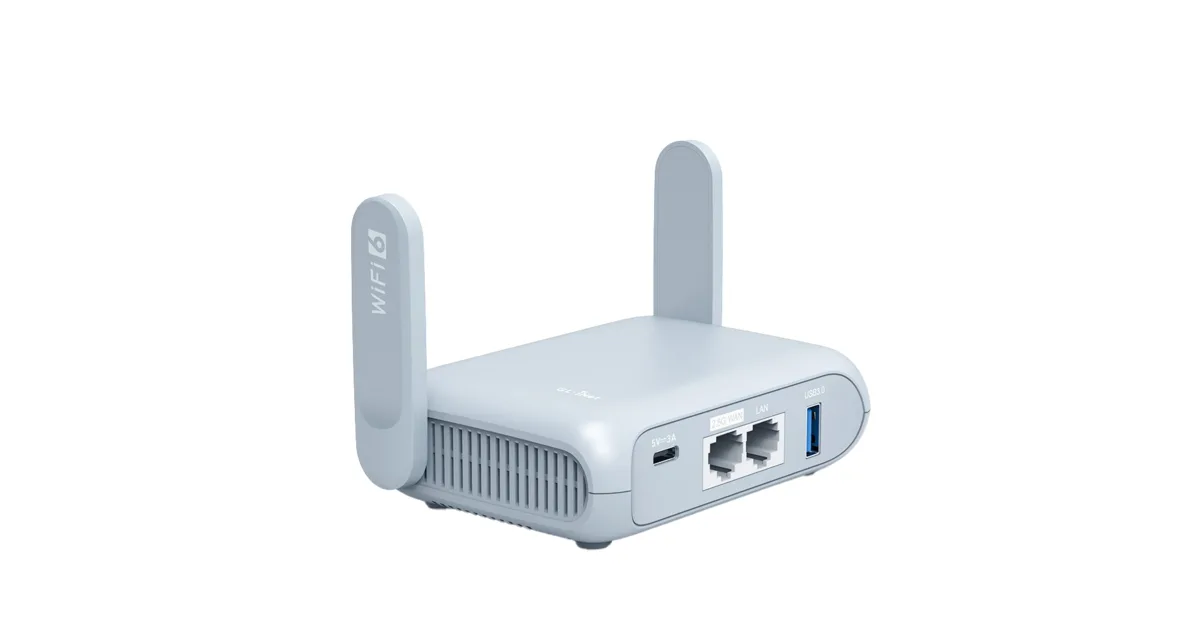
GL.iNet GL-MT3000 (Beryl AX) is the best all-around travel router. It is pocket-sized, supports WiFi 6, has a built-in VPN client, and converts captive portal hotel WiFi into a private network for all your devices. At under $70, it is the device most nomads should carry.
TP-Link TL-WR902AC is the budget pick. It lacks WiFi 6 and VPN client features, but it is reliable, tiny, and costs roughly $35. Perfect if you just need to share one Ethernet connection among a laptop and phone.
Netgear Nighthawk M6 Pro is the premium mobile hotspot. It is a 5G router with a SIM slot, delivering fiber-like speeds in supported cities. Expensive and bulky, but unbeatable when hotel WiFi is dead and you need to lead a webinar.
Why Carry a Portable WiFi Hotspot?
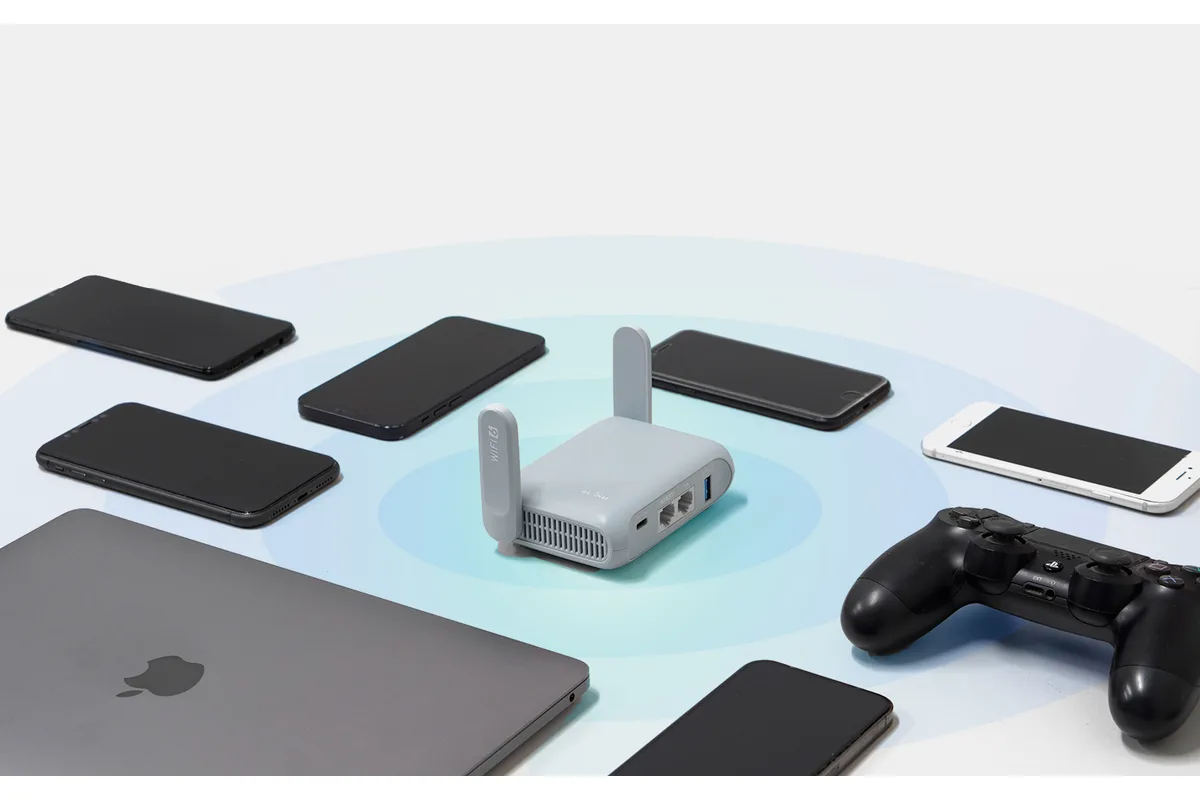
A travel router does three things that matter to remote workers:
- Converts one login to many devices. Hotels often limit you to one or two devices per room. A router logs in once and shares the connection to your laptop, phone, tablet, and streaming stick.
- Creates a secure network. Hotel WiFi is shared with every guest. A router puts your devices behind their own NAT firewall and encryption.
- Bypasses captive portals on smart devices. Your Chromecast, Apple TV, or work VPN often cannot handle hotel login pages. A router handles the login and presents a clean network to your gear.
Top 5 Travel Routers for 2026
1. GL.iNet GL-MT3000 (Beryl AX)
The Beryl AX is the current king of travel routers. It is smaller than a deck of cards, runs OpenWrt firmware, and supports WiFi 6 speeds. The built-in WireGuard and OpenVPN clients mean you can route your entire hotel connection through your VPN without installing software on every device.
Best for: Security-conscious nomads who want VPN protection on all devices with one click. Limitation: The web interface is powerful but intimidating for non-technical users.
2. TP-Link TL-WR902AC
The WR902AC is the “just works” option. It has five modes including router, repeater, and access point. Setup takes under two minutes, and the range is surprisingly good for a device the size of a matchbox.
Best for: Travelers who want simplicity and do not need VPN or WiFi 6. Limitation: No built-in VPN client. You will need to run VPN software on each device individually.
3. Netgear Nighthawk M6 Pro
The M6 Pro is a 5G mobile hotspot, not a traditional travel router. You insert a local SIM or eSIM and create your own high-speed network anywhere there is cell coverage. In 5G cities, it delivers speeds that crush hotel WiFi.
Best for: Nomads who work from places with terrible WiFi but good cellular coverage. Limitation: Expensive, requires a data plan, and battery lasts roughly 6 hours of heavy use.
4. GL.iNet GL-SFT1200 (Opal)
The Opal is the budget sibling to the Beryl AX. It drops WiFi 6 but keeps the OpenWrt firmware, VPN client, and compact size. At under $35, it is the best entry point for nomads curious about travel routers.
Best for: First-time travel router buyers who want VPN features on a budget. Limitation: Slower speeds than the Beryl AX. Fine for Zoom, not for 4K streaming.
5. Huawei E5576-320
The Huawei is a 4G LTE hotspot popular in Asia and Europe. It is unlocked, accepts any SIM, and has a battery that lasts all day. It is not a router in the traditional sense — it creates a network from cellular data, not from hotel WiFi — but for nomads in Southeast Asia, it is often the primary internet source.
Best for: Nomads in regions where cellular data is cheap and hotel WiFi is unusable. Limitation: No Ethernet port and no VPN client. Purely a cellular hotspot.
Travel Router vs eSIM vs Local SIM
You have three ways to stay connected abroad. Here is how they compare:
| Method | Upfront Cost | Data Cost | Best For | Setup |
|---|---|---|---|---|
| Travel Router | $35–$500 | Free (uses hotel WiFi) | Secure hotel WiFi sharing | Moderate |
| eSIM | $0 | $5–$50/GB | Quick data on arrival | Easy |
| Local SIM | $0–$10 | $5–$30/month | Long stays, heavy data | Moderate |
The smart nomad uses all three. An eSIM like Airalo or Holafly gets you online the moment you land. A local SIM gives you cheap data for the month. A travel router secures and shares whatever connection you have.
For the eSIM side, see our best eSIM for digital nomads guide.
Setup Tips for Hotel WiFi
Getting a portable wifi hotspot online in a hotel is usually straightforward:
- Plug the router into the wall and power it on.
- Connect your laptop to the router’s default WiFi network. The name and password are on a sticker on the device.
- Open the router’s admin page in a browser (usually 192.168.8.1).
- Set the mode to “Repeater” or “WISP” and scan for the hotel’s WiFi network.
- Select the hotel network and enter the room password or accept the terms on the captive portal page.
- Your devices now connect to the router, not the hotel network directly.
If the hotel only offers Ethernet, switch the router to “Router” mode and plug the cable into the WAN port. You now have a private, fast network.
Portable WiFi Hotspot: FAQ
Do I need a travel router if I have an eSIM? Yes, if you use multiple devices or want a secure network. An eSIM gives one device data. A router shares that data to laptops, tablets, and streaming devices while adding a firewall.
Will a travel router speed up slow hotel WiFi? No. A router cannot create bandwidth that does not exist. It can, however, provide a more stable connection, better range in your room, and security that hotel WiFi lacks.
Is it legal to use a travel router in hotels? Yes. You are not hacking anything; you are simply sharing a connection you already have permission to use. Some hotels limit devices per room, but routers typically bypass this limitation.
What is the difference between a travel router and a mobile hotspot? A travel router shares an existing WiFi or Ethernet connection. A mobile hotspot creates a network from cellular data using a SIM card. The Netgear Nighthawk M6 Pro is a hotspot; the GL.iNet Beryl AX is a router.
Ready to figure out where you are heading next? Take the free WhereToNomad quiz for a personalized shortlist of visa countries based on your income, passport, and travel style.
Also read: Best eSIM for Nomads | Best VPN for Nomads | Digital Nomad Toolkit | Best Coworking Chiang Mai
Find your perfect digital nomad visa match
Answer 5 questions — personalized results in under 2 minutes. Free.
Take the Free Quiz →