Few natural landmarks carry the kind of instant global recognition that Niagara Falls does. It appears on postcards, in films, and in the mental image most people form of Canada long before they ever set foot in the country. What often surprises first-time visitors is how accessible it actually is. For anyone spending time in Toronto, one of Canada’s most visited cities, Niagara Falls sits close enough to be a realistic day trip rather than a separate expedition requiring its own leg of travel.
This guide covers what makes the falls worth the trip, how to think about timing your visit, and the practical details that make the difference between a rushed excursion and a genuinely memorable day.
The Geography That Makes the Falls What They Are
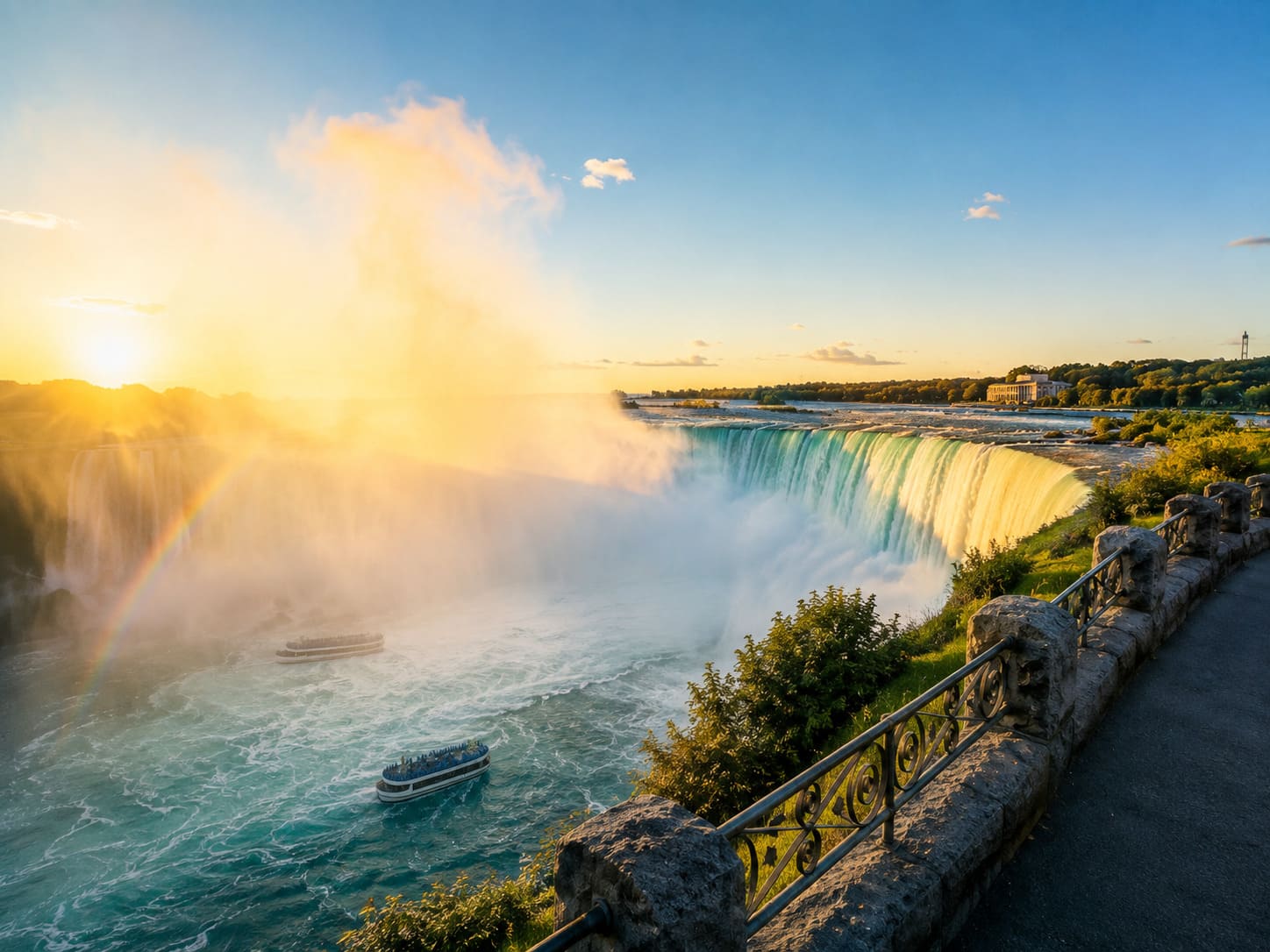
Niagara Falls is not a single waterfall but three: Horseshoe Falls, the American Falls, and the smaller Bridal Veil Falls. The falls sit on the border between Ontario, Canada and New York State, formed where the Niagara River drops roughly 51 metres on its route between Lake Erie and Lake Ontario. Horseshoe Falls, which curves dramatically and carries the overwhelming majority of the river’s flow, sits almost entirely on the Canadian side, which is a large part of why the Canadian viewpoints are consistently rated as offering the more dramatic perspective.
The volume of water moving over the falls varies with the season, fed by the broader Great Lakes watershed. Spring snowmelt produces the highest flow, while late summer typically sees somewhat reduced volume, though the falls remain a formidable sight in any month of the year.
Why the Canadian Side Draws the Larger Share of Visitors
Both sides of the border offer legitimate viewpoints and attractions, but there is a reason most first-time visitors are directed toward the Canadian side. Standing at Table Rock, the main Canadian viewing area, puts you almost directly in front of Horseshoe Falls, facing the full curve of falling water. The equivalent view from the American side looks across at Horseshoe Falls from an angle rather than head-on.
The Canadian side has also developed a denser concentration of attractions built around the falls themselves, including a boat tour that approaches the base of Horseshoe Falls, an underground tunnel system with an observation deck positioned directly behind the curtain of water, and an evening illumination that lights the falls after dark year-round. For visitors with a single day to spend, the Canadian side offers the more complete experience without requiring a border crossing.
What the Experience Actually Involves
The centrepiece of most visits is getting physically close to the water. A boat tour departing from the base of Clifton Hill carries passengers to within metres of Horseshoe Falls, where the noise and mist become genuinely overwhelming in the final approach. Ponchos are provided, though most visitors emerge with wet shoes regardless of preparation.
A separate attraction takes a different approach entirely, descending by elevator into tunnels cut through the bedrock behind the falls, leading to an outdoor observation deck positioned at the base of the falling water. The perspective from inside the cliff, looking out through the curtain of water, is a genuinely different sensory experience from the boat, and most visitors who do both come away describing them as complementary rather than redundant.
Beyond the two signature experiences, the falls area includes an observation tower with panoramic views over the entire region, a walking trail along the parkway that runs north from the falls with quieter and less crowded viewpoints, and a commercial strip nearby with restaurants and amusements for visitors who want to extend their time in the area.
Timing a Visit Well
The falls operate year-round, and each season offers a genuinely different character. Summer brings the fullest attraction lineup and warmest weather, along with the largest crowds and the longest queues at peak attractions. Fall, particularly late September through mid-October, is frequently cited by repeat visitors as the strongest overall window, combining comfortable weather, full attraction availability, and noticeably lighter crowds once the summer peak has passed.
Spring carries an underappreciated advantage: the falls run at their highest water volume from snowmelt, making them more powerful than at any other point in the year, while crowds remain well below summer levels through most of April and May. Winter transforms the surrounding landscape entirely, with mist from the falls freezing on nearby trees and railings to create ice formations unlike anything visible in other seasons, and with a fraction of the typical visitor volume.
Time of day matters as much as season. The falls are least crowded in the first hour or two after major attractions open in the morning, and the evening brings a markedly different atmosphere once the illumination begins at dusk, with fireworks scheduled above the falls on many evenings between May and October.
Getting There from Toronto
Niagara Falls sits approximately 130 kilometres from downtown Toronto, and the drive along the QEW typically takes between 90 minutes and two hours depending on traffic. This proximity is one of the more pleasant surprises for visitors who assume a landmark of this scale must require a longer journey to reach.
Visitors have several practical options for making the trip. Self-driving offers the most flexibility but comes with real costs, including parking fees near the main attractions that can reach C$25 to C$40 for a full day during peak season, along with the challenge of navigating unfamiliar roads and managing queue times at popular attractions independently. A seasonal train connection exists but does not run directly to the falls area, requiring an additional taxi or rideshare leg.
For visitors who want the logistics handled entirely, Niagara Falls tours from Toronto provide transportation, parking, and often skip-the-line access to the main attractions as part of a single organised day. This tends to be the most efficient way for first-time visitors to see the most within a limited amount of time, particularly during the busier summer months when independent queue management can consume a significant portion of the day.
What a Well-Planned Day Looks Like
The strongest single-day itineraries tend to follow a consistent pattern regardless of how a visitor arrives. Early arrival, ideally before mid-morning, secures shorter queues at the boat tour and the tunnel attraction, along with the best natural light for photography from the Canadian side. Covering the two signature water-based attractions before midday, followed by a break for lunch and a quieter walk along the parkway in the early afternoon, produces a well-paced day that avoids the fatigue of trying to cram every attraction into a single rushed sequence.
Visitors with a full day available and an interest in seeing the falls after dark should factor in the shift in atmosphere that occurs in the evening. The crowds that build through the middle of the day thin out considerably by early evening, and the falls under illumination present a genuinely different visual experience from the daytime version. A Niagara Falls day tour from Toronto that departs in the morning and returns in the late afternoon covers the core daytime experience comprehensively, while visitors specifically prioritising the evening atmosphere may prefer a later departure structured around the illumination.
Practical Considerations Worth Knowing in Advance
Booking the boat tour and tunnel attraction in advance is strongly advisable for visits during July and August, when walk-up queues can exceed an hour during peak times. Outside of peak summer, advance booking reduces risk but is less critical.
Clothing should account for the falls’ significant mist, which is present at the main viewpoints regardless of season and can be substantial on windier days. Waterproof or water-resistant footwear is a practical choice year-round, and winter visitors in particular should prepare for temperatures that feel considerably colder at the water’s edge than the surrounding area suggests.
Passport requirements apply only for visitors intending to cross into the United States side. A complete visit to the Canadian attractions, which represent the majority of what draws visitors to Niagara Falls in the first place, requires no border crossing and no additional documentation beyond what is needed to enter Canada itself.
The Bottom Line
Niagara Falls earns its reputation. The scale and force of Horseshoe Falls, best appreciated from the Canadian side, is one of the few natural landmarks that consistently exceeds the expectations set by photographs and film. For visitors spending time in Toronto, the falls represent one of the most accessible and rewarding day trips available anywhere in Canada, combining a short travel time with an experience that stands comfortably alongside any of the country’s other major attractions.
Find your perfect digital nomad visa match
Answer 5 questions — personalized results in under 2 minutes. Free.
Take the Free Quiz →