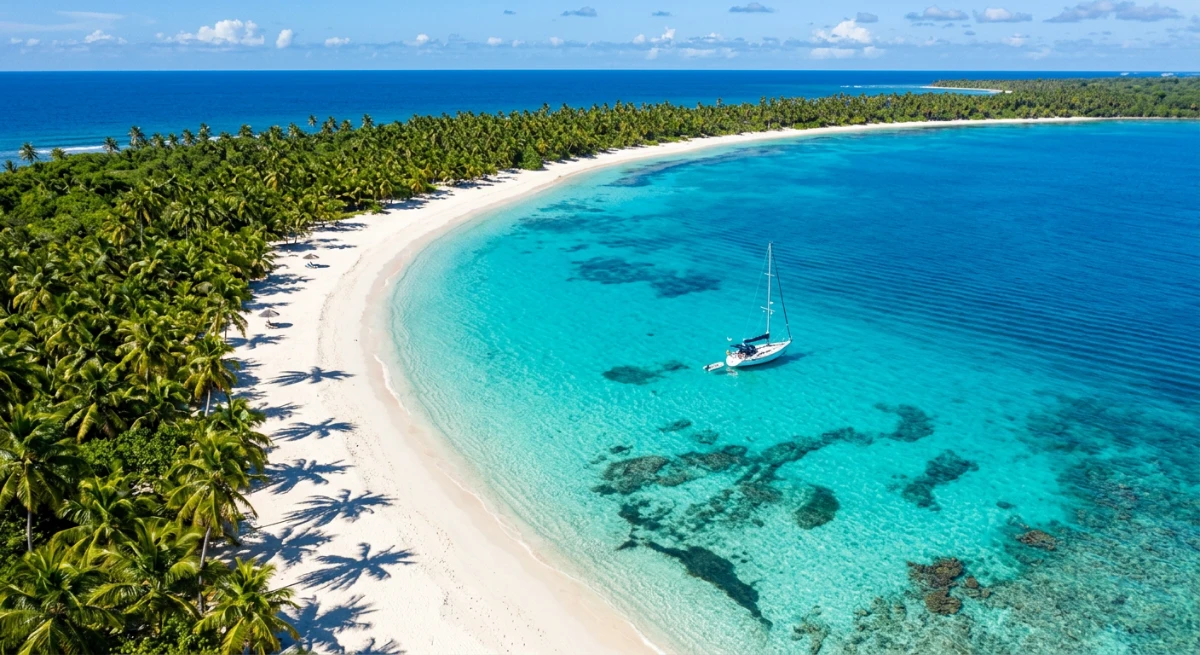
The Caribbean was the first region in the world to react to the remote-work boom of 2020. Within months of the pandemic shutting down tourism, Barbados launched the Welcome Stamp visa and triggered a wave of similar programs across the region. Six years later, eight Caribbean nations now offer formal digital nomad visas, and the value proposition is unique: zero tax on foreign income in most cases, beach-front living year-round, and direct flights to North America and Europe.
This guide ranks the best Caribbean digital nomad visas for 2026 with verified numbers on income requirements, costs, and what each island actually delivers. Want personalized matches? Take the free WhereToNomad quiz to filter by Caribbean in under two minutes.
Why Caribbean Digital Nomad Visas Are Different
The Caribbean offers a distinct nomad value proposition compared to Europe, Asia, or Latin America. Three structural advantages:
Tax efficiency. Almost every Caribbean digital nomad visa exempts foreign-sourced income from local tax. The Cayman Islands, Anguilla, and Bermuda go further with zero personal income tax for residents.
Quality of infrastructure. Despite their size, most Caribbean nomad destinations offer fiber internet (200+ Mbps in major hubs), reliable healthcare for non-emergency care, and English as the working language across most islands.
Easy access. Direct flights from major US cities (New York, Miami, Atlanta) and from London land you on these islands in 2-8 hours. Compare that to a 12-15 hour flight to Bali.
The trade-offs are real: cost of living is dramatically higher than Asia or Latin America (typically $2,500-5,000/month for a single nomad), grocery prices are imported and expensive, and small island life can feel limiting after extended stays.
The Complete Caribbean Digital Nomad Visa Comparison
| Country | Income Req. | Visa Duration | Tax on Foreign Income | Application Cost |
|---|---|---|---|---|
| Barbados | $50,000/yr | 1 year, renewable | None | $2,000 single / $3,000 family |
| Antigua and Barbuda | $50,000/yr | 2 years | None | $1,500 single / $2,000 couple |
| Cayman Islands | $100k single / $150k couple / $180k family | 2 years | None (zero income tax) | $1,469 + $500/dependent |
| Dominica | None formally | Multiple options | None | Variable |
| Curacao | None formally specified | 6 months + 6 months ext. | None | $294 |
| Anguilla | None formal | 1 year | None (zero income tax) | $2,000 single |
| Belize | $75,000/yr individual | 6 months, renewable | None on foreign | $500 |
| Bermuda | None formal | 1 year | None (zero income tax) | $263 |
1. Barbados Welcome Stamp: The Original and Still the Best
Barbados invented the modern Caribbean digital nomad visa with its Welcome Stamp program in June 2020, and it remains the most popular option in the region. The income requirement is $50,000/year, the visa lasts 12 months (renewable), and Barbadian authorities exempt all foreign-sourced income from local tax.
Bridgetown delivers the best of Caribbean infrastructure: fiber internet at 200+ Mbps in coastal areas, world-class beaches accessible by foot from most accommodation, a strong food scene (the rum and cou-cou heritage is legitimate), and an established expat community. Cost of living for a single nomad runs $2,800-4,000/month including beachfront accommodation.
- Income requirement: $50,000/yr
- Visa duration: 12 months, renewable
- Tax on foreign income: None
- Application fee: $2,000 single, $3,000 family
- Internet: 200+ Mbps fiber in Bridgetown
Browse Bridgetown accommodation on Booking.com or Agoda Barbados. Get a Barbados eSIM via Airalo for instant connectivity. Plan island excursions on GetYourGuide Barbados.
See the full Barbados breakdown →
2. Antigua and Barbuda Nomad Digital Residence: Best 2-Year Caribbean Option
Antigua’s Nomad Digital Residence visa is the longest-duration formal digital nomad visa in the Caribbean at 2 years. The income requirement matches Barbados at $50,000/year, the application fee is slightly lower ($1,500 single, $2,000 couple), and Antigua maintains zero tax on foreign income.
The 2-year duration matters significantly. It removes the annual reapplication overhead and lets you settle into a longer-term rhythm. Antigua has an extensive network of beaches, strong sailing culture, and a more compact island feel than Barbados. Internet infrastructure is solid in St. John’s and most resort areas.
- Income requirement: $50,000/yr
- Visa duration: 2 years
- Tax on foreign income: None
- Application fee: $1,500 single, $2,000 couple
- Best areas: St. John’s, English Harbour, Jolly Harbour
Find Antigua accommodation on Booking or Agoda Antigua. Antigua eSIM via Airalo handles all major networks.
See the full Antigua breakdown →
3. Cayman Islands Global Citizen Concierge: Best for High Earners
The Cayman Islands offers the most exclusive Caribbean digital nomad option with the highest income bar. The Global Citizen Concierge Program (GCCP) requires:
- $100,000/year for individual applicants
- $150,000/year for applicants with a spouse or civil partner
- $180,000/year for applicants with spouse and dependent children
The visa lasts 2 years, with an annual fee of $1,469 for parties of up to 2 persons plus $500 per dependent. The headline benefit is that the Cayman Islands has zero personal income tax: your full income is yours to keep.
Grand Cayman delivers genuine first-world infrastructure. Seven Mile Beach is one of the world’s most photographed coastlines, the financial services sector keeps the country wealthy and well-maintained, and there is direct connectivity to Miami in just over an hour. The catch: cost of living is brutal. Single-bedroom apartments in good areas of George Town start at $3,000/month, groceries are 30-50% above US prices, and dining out is consistently expensive. Budget $5,000-7,500/month for a comfortable single-person setup.
- Income requirement: $100k single / $150k couple / $180k family with dependents
- Visa duration: 2 years
- Tax on foreign income: None (zero income tax)
- Application fee: $1,469 for up to 2 persons + $500/dependent
- Internet: 250+ Mbps fiber widely available
Browse George Town hotels on Booking or Agoda Cayman Islands. Cayman Islands eSIM via Airalo.
See the full Cayman Islands breakdown →
4. Curacao @HOME in Curacao Visa: Best Mid-Range Caribbean Option
Curacao’s @HOME in Curacao visa launched in 2020 and remains one of the most affordable Caribbean nomad options. There is no formal published minimum income requirement (the program asks for “proof of solvency” via bank statements). The application fee is approximately ANG 535 (~$294 USD) per applicant, with no fee for family bundles. The visa runs 6 months, extendable for another 6 months. Curacao is part of the Dutch Kingdom, which gives it stronger institutional infrastructure than many neighboring islands: well-maintained roads, reliable utilities, modern healthcare, and Dutch-influenced education.
Willemstad’s UNESCO-listed pastel architecture is genuinely unique in the Caribbean, and the country sits outside the hurricane belt (a non-trivial advantage during August-October peak storm season). Foreign income is not taxed under the program. Cost of living is more reasonable than Cayman or Anguilla at $2,800-3,800/month for a single nomad.
- Income requirement: None formally specified (proof of solvency via bank statements)
- Visa duration: 6 months + 6 months extension
- Tax on foreign income: None
- Application fee: ~$294 (ANG 535)
- Internet: 150-300 Mbps fiber
Find Willemstad accommodation on Booking or Agoda Curacao. Curacao eSIM via Airalo.
See the full Curacao breakdown →
5. Anguilla Work In Visa: Best for Remote Privacy
Anguilla’s Work In Anguilla program launched in 2020 and remains one of the smallest, quietest options in the Caribbean. The application fee is $2,000 for a single applicant and the duration is 12 months. There is no formal monthly income requirement, but applicants must demonstrate financial means appropriate to support their stay.
Anguilla has zero personal income tax (the country is funded primarily by tourism and offshore financial services). The island is small, low-key, and explicitly designed for high-net-worth visitors who want quiet luxury rather than party-island energy. This is the right Caribbean option for someone who wants total privacy with first-class beach access. Cost of living is high: $4,000-6,000/month for a comfortable setup including villa-style accommodation.
- Income requirement: None formal (financial means demonstrated)
- Visa duration: 12 months
- Tax on foreign income: None (zero income tax)
- Application fee: $2,000 single
- Internet: 100-200 Mbps in The Valley
Browse Anguilla accommodation on Booking or Agoda Anguilla. Anguilla eSIM via Airalo.
See the full Anguilla breakdown →
6. Dominica Work In Nature Extended Stay Visa: Best Eco-Adventure Option
Dominica is the most distinctive Caribbean digital nomad option, marketing itself explicitly to nomads who prioritize nature over beach culture. The country has no formal income requirement (applicants demonstrate financial means), and exempts foreign income from local tax.
Dominica is the “Nature Island of the Caribbean”: rainforest hikes (the Boiling Lake trek is world-famous), pristine diving, hot springs, and minimal mass tourism. Internet has improved significantly post-Hurricane Maria recovery, with Roseau now offering reliable fiber. This is the right Caribbean option for nomads who actively want to be off the standard nomad map.
- Income requirement: None formal
- Visa duration: Variable (Work In Nature program)
- Tax on foreign income: None
- Best areas: Roseau, Portsmouth, Calibishie
- Internet: 100-200 Mbps in Roseau
Find Dominica accommodation on Booking or Agoda Dominica. Dominica eSIM via Airalo.
See the full Dominica breakdown →
7. Belize Work Where You Vacation: Best Mainland Caribbean Option
Belize is geographically Central American but culturally Caribbean, with English as the official language and strong Caribbean cultural ties. The Work Where You Vacation digital nomad visa requires $75,000/year for individuals (or $100,000 for families), runs 6 months renewable, and exempts foreign income.
Belize offers world-class diving (the Belize Barrier Reef is the second-largest in the world), reliable infrastructure in Belize City and San Pedro on Ambergris Caye, and direct flights to multiple US cities. The cost of living is more reasonable than the small island options at $2,200-3,200/month.
- Income requirement: $75,000/yr individual / $100,000 family
- Visa duration: 6 months, renewable
- Tax on foreign income: None
- Application fee: $500
- Best areas: Belize City, San Pedro, Caye Caulker, Placencia
Belize City accommodation on Booking or Agoda Belize. Belize eSIM via Airalo.
See the full Belize breakdown →
How to Choose the Right Caribbean Visa
Best overall + most established community: Barbados Welcome Stamp.
Best for 2-year duration: Antigua and Barbuda Nomad Digital Residence.
Best for high earners + zero income tax: Cayman Islands Global Citizen Concierge.
Best mid-range value: Curacao @HOME in Curacao.
Best off-grid eco option: Dominica Work In Nature.
Best mainland Caribbean: Belize Work Where You Vacation.
Best for ultra-private high earners: Anguilla Work In Anguilla.
The Caribbean Cost Reality
Even the cheapest Caribbean digital nomad option will cost significantly more than Asia or Latin America. Here is the honest cost-of-living breakdown for typical single-nomad setups:
| Island | Monthly Cost | Notes |
|---|---|---|
| Belize (San Pedro) | $2,200-3,200 | Cheapest Caribbean option |
| Curacao (Willemstad) | $2,800-3,800 | Strong value, Dutch infrastructure |
| Barbados (Bridgetown) | $2,800-4,000 | Established nomad community |
| Dominica (Roseau) | $2,500-3,500 | Adventure-oriented, lower in rural |
| Antigua (St. John’s) | $3,000-4,500 | Quiet luxury, smaller community |
| Anguilla (The Valley) | $4,000-6,000 | Premium quiet privacy |
| Cayman (George Town) | $5,000-7,500 | Highest cost, zero income tax |
For a broader comparison including Latin America and Asia options, see our cheapest digital nomad visas guide and best cities for digital nomads.
Hurricane Season Planning
The Caribbean hurricane season runs June through November, with peak risk August through October. Most digital nomad visas continue uninterrupted during hurricane events, but practical planning matters: ensure your accommodation is built to modern hurricane codes, keep insurance current, and consider scheduling a return to North America or Europe during peak storm months.
Curacao, Aruba, and Bonaire (the ABC islands) sit outside the hurricane belt, making them safer year-round bases. The Bahamas, Jamaica, Cuba, and most of the Lesser Antilles are within the hurricane corridor.
Setup Essentials for Caribbean Nomading
Insurance is mandatory. Every Caribbean digital nomad visa requires proof of comprehensive medical insurance, often with hurricane and natural-disaster coverage. A global plan via VisitorsCoverage typically meets visa documentation requirements. See our travel insurance comparison.
eSIM before arrival. Caribbean local SIM purchases often require ID and address proof. Pre-arrange an Airalo eSIM for the specific island before flying.
VPN for US/UK content. Many Caribbean nomads work for North American or European clients. A VPN like NordVPN keeps you connected to home banking, streaming, and work tools. See our best VPN guide.
Banking. Most Caribbean countries make local accounts difficult to open without permanent residency. Multi-currency fintech accounts handle most banking needs across the region.
Tax filing for Americans. Even with zero local tax, US citizens must file annually. e-file.com supports the Foreign Earned Income Exclusion, which combined with a tax-free Caribbean island can reduce your effective tax burden significantly. See our tax-free countries guide and American digital nomad guide.
Full toolkit. Our digital nomad toolkit guide covers every tool we recommend.
Find Your Best Caribbean Match
Use the WhereToNomad quiz to enter your income and lifestyle priorities. The quiz instantly shows which Caribbean digital nomad visas you qualify for, ranked by total cost and quality of life.
Also read: Best Cities for Digital Nomads | Best Digital Nomad Visa in Latin America | Best Digital Nomad Visa in Asia | Best Digital Nomad Visa in Europe | Tax-Free Countries | Best Travel Insurance | How to Apply
Find your perfect digital nomad visa match
Answer 5 questions — personalized results in under 2 minutes. Free.
Take the Free Quiz →