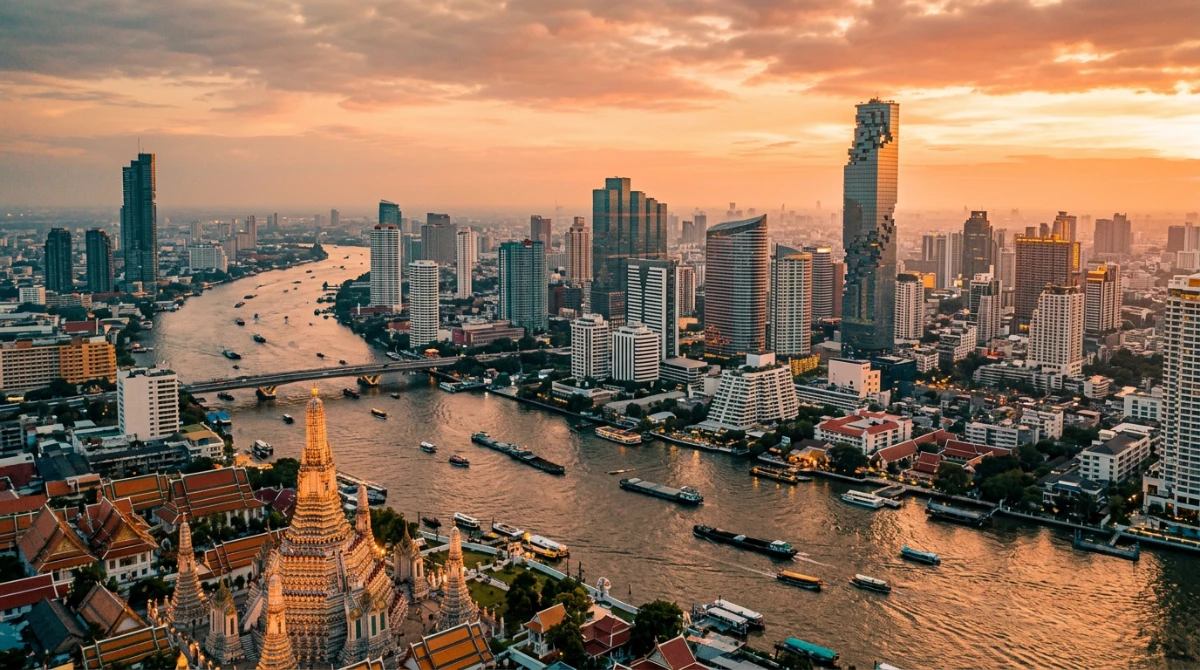
Asia is the highest-ROI region in the world for digital nomads. A $3,000/month income that buys you a studio in Lisbon buys you a doorman building, a private chef, and a motorbike in Chiang Mai. Internet speeds in Bangkok, Seoul, and Kuala Lumpur consistently outpace most European capitals. And as of 2026, more than half a dozen Asian countries have launched formal digital nomad visa programs to compete for remote workers.
This guide ranks the best digital nomad visa in Asia for 2026 across eight countries, with verified numbers on income requirements, taxes, internet speeds, and quality of life. Want personalized matches? Take the free WhereToNomad quiz and filter by Asia in under two minutes.
Why Asia Is the Best Region for Digital Nomads in 2026
Three numbers explain Asia’s appeal. First: cost of living. A comfortable single-person budget in Bangkok, Bali, or Kuala Lumpur runs $1,500 to $2,200 per month. The same lifestyle in Lisbon or Barcelona costs $2,800 to $3,500. Second: internet. Thailand averages 250+ Mbps fixed broadband, South Korea exceeds 200 Mbps, and Singapore tops 300 Mbps according to Speedtest data. Third: visa flexibility. Thailand’s DTV grants 5 years. Indonesia’s Second Home Visa extends to 5-10 years for high-net-worth applicants. Malaysia’s DE Rantau is 12 months renewable. These are some of the longest digital nomad-eligible visas available anywhere.
Add to that direct flights to Europe and Australia, low-cost healthcare, and some of the world’s strongest expat communities, and Asia becomes the obvious answer for nomads who want maximum quality of life per dollar.
The Complete Asian Digital Nomad Visa Comparison
| Country | Income / Asset Req. | Visa Duration | Tax on Foreign Income | Application Cost |
|---|---|---|---|---|
| Thailand | ~$15,000 in savings (THB 500k) | 5 years (180 days/entry) | Conditional (post-2024) | ~$300 |
| Indonesia | $60,000/yr (E33G) | 1 year, non-extendable | Conditional | ~$430-600 |
| Malaysia | $24,000/yr | 12 months renewable | None on foreign income | ~$240 |
| Japan | 6 months, no renewal | None for non-residents | ~$50 | |
| South Korea | ~$66,000/yr | 1 year + 1 year extension | Full if tax-resident | ~$80 |
| Sri Lanka | None formally specified | 30 days extendable | None for non-residents | ~$100 |
| Philippines | $24,000/yr | 1 year + 1 year renewal | None on foreign income | ~$200-300 |
| Taiwan | Gold Card system | 1-3 years | Reduced under conditions | ~$100 |
1. Thailand DTV Visa: Best Overall in Asia
Thailand’s Destination Thailand Visa (DTV), launched in July 2024, is the single most attractive digital nomad-eligible visa in Asia and arguably the world. It grants a 5-year multi-entry permit allowing 180-day stays per entry, with one 180-day extension per year, and the ability to leave and re-enter to reset the clock. The financial requirement is THB 500,000 (approximately $15,000) in liquid assets rather than a monthly income threshold, and remote workers, freelancers, and Muay Thai students all qualify under different sub-categories.
Bangkok offers world-class healthcare, 300+ Mbps fiber as standard, and a cost of living that lets a $3,500/month earner live in a serviced apartment with rooftop pool, gym, and weekly maid service. Chiang Mai remains the budget capital of the nomad world at under $1,500/month for a comfortable lifestyle. For deep details on Thailand specifically, read our complete Thailand DTV guide.
- Financial requirement: THB 500,000 (~$15,000) in savings for at least 3 months
- Visa duration: 5 years, 180 days per entry, multi-entry, one 180-day extension per year
- Tax on foreign income: Foreign income remitted into Thailand the same year it was earned is taxed for tax-residents (>180 days)
- Best cities: Bangkok, Chiang Mai, Phuket
- Internet: 250+ Mbps average fixed broadband
Browse Bangkok accommodation on Booking.com or search Thailand-wide hotels on Agoda. Connect on arrival with Thailand eSIM from Airalo.
See the full Thailand breakdown →
2. Indonesia E33G Remote Worker Visa: Best for Slow Travel and Surf
Indonesia’s E33G Remote Worker Visa, launched April 2024, is the country’s first formal digital nomad visa. It requires a minimum annual income of $60,000 from foreign sources, valid for 1 year as a multi-entry KITAS, and is non-extendable in-country (you must exit and reapply for a renewal). Indonesia also offers the Second Home Visa for high-net-worth individuals with approximately $130,000 in savings, valid for 5-10 years. The B211A “social-cultural” visa is the workhorse for shorter stays: 60 days extendable to 180 days, but it does not formally permit work.
Bali’s nomad infrastructure in Canggu, Ubud, and Uluwatu is unmatched. Dozens of dedicated coworking spaces, hundreds of cafes with reliable WiFi, an established community for everything from yoga retreats to mastermind groups, and a cost of living between $1,500 and $2,500 per month for the typical nomad. The honest assessment in 2026: traffic in Canggu has worsened significantly, internet reliability outside coworking spaces is variable, and the $60,000 annual income bar excludes many lower-earning nomads who previously relied on B211A loopholes.
- Income requirement: $60,000/yr foreign-sourced (E33G) or ~$130,000 savings (Second Home)
- Visa duration: 1 year non-extendable (E33G) or 5-10 years (Second Home)
- Tax on foreign income: Tax-resident if >183 days, with worldwide income then taxable
- Best areas: Canggu, Ubud, Uluwatu, Sanur
- Internet: 30-100 Mbps average; co-working spaces hit 200+ Mbps
Find Bali accommodation on Booking or Agoda’s Indonesia hotels. Pick up an Indonesia eSIM via Airalo before you fly. Bali WiFi can be patchy, so a VPN like NordVPN plus solid mobile data is non-negotiable.
See the full Indonesia breakdown →
3. Malaysia DE Rantau: Best Underrated Pick
Malaysia’s DE Rantau Nomad Pass launched in 2022 and has quietly become one of the best-value digital nomad visas in the world. The income requirement is $24,000 per year (around $2,000/month), the visa lasts 12 months and is renewable, and Malaysia operates a territorial tax system: foreign-sourced income is generally not taxed locally.
What makes Malaysia compelling is that you get most of Singapore’s quality of life at half the cost. Kuala Lumpur is a modern world-city with excellent fiber internet, English widely spoken, world-class hospitals, and the country’s geographic position makes it a perfect base for exploring the rest of Southeast Asia. Penang offers the same on a slower beach-town scale. Cost of living in KL runs $1,800 to $2,500 per month for a comfortable single-person setup.
- Income requirement: $24,000/yr ($2,000/mo)
- Visa duration: 12 months, renewable
- Tax on foreign income: None (territorial system)
- Best cities: Kuala Lumpur, Penang, Johor Bahru
- Internet: 100-300 Mbps fiber widely available
Browse Kuala Lumpur hotels on Booking or Agoda Malaysia. Malaysia eSIM via Airalo keeps you connected the moment you land at KLIA.
See the full Malaysia breakdown →
4. Japan Digital Nomad Visa: Best for High Earners
Japan launched its digital nomad visa (officially “Designated Activities” status) in March 2024. The income requirement is approximately ¥10 million per year (around $66,000), and the visa duration is only 6 months with no renewal option (you must spend 6 months outside Japan before reapplying). Critically, the visa is only available to citizens of 49 specific countries that have visa-exemption agreements AND tax treaties with Japan, including the US, UK, EU member states, Australia, Canada, South Korea, and Singapore. Citizens of China, India, Vietnam, and most of Southeast Asia are not eligible.
The benefits are extraordinary: world-class infrastructure, the safest country in the developed world, fiber that makes Silicon Valley look slow, and food and culture that genuinely changes how you think about quality of life. Tax-wise, because the visa is capped at 6 months, holders typically remain non-residents and avoid Japanese income tax on foreign-sourced earnings. The drawbacks: $66,000/year income bar from select countries only, 6-month maximum stay, and no path to renewal.
- Income requirement:
¥10M/yr ($66,000) - Visa duration: 6 months, no renewal
- Tax on foreign income: Generally none for non-residents (6-month cap keeps most holders non-resident)
- Eligible nationalities: 49 countries with visa-waiver and tax treaty agreements with Japan
- Best cities: Tokyo, Osaka, Fukuoka, Kyoto
- Internet: 200+ Mbps average fiber
Tokyo accommodation on Booking and Japan-wide hotels on Agoda. Japan eSIM via Airalo is essential, as physical SIM cards in Japan typically require a residence card.
See the full Japan breakdown →
5. South Korea Workation Visa (F-1-D): Best for Tech Workers
South Korea’s Workation Visa, officially the F-1-D, launched January 1, 2024, with an income requirement of approximately ₩88.1 million per year (around $66,000), set at twice Korea’s GNI per capita. The visa lasts 1 year with a 1-year extension possible (max 2 years total). Notably, the program is primarily for employees of foreign companies, and independent freelancers without an overseas employer affiliation are generally not eligible.
Seoul has among the world’s fastest residential internet (averaging 200+ Mbps), one of the best food scenes globally, an extraordinary public transport network, and a strong tech industry that makes networking with local engineers and founders straightforward. The cost of living is higher than Southeast Asia at $2,500 to $3,500/month for a comfortable lifestyle in Seoul, but lower than Tokyo for equivalent quality.
- Income requirement:
₩88.1M/yr ($66,000) - Visa duration: 1 year + 1 year extension (max 2 years)
- Tax on foreign income: Full if tax-resident (>183 days)
- Eligibility note: Must be employed by foreign company; freelancers not affiliated with an overseas employer are generally excluded
- Best cities: Seoul, Busan, Jeju Island
- Internet: 200+ Mbps average
Browse Seoul accommodation on Booking or Agoda Korea. South Korea eSIM via Airalo before arrival.
See the full South Korea breakdown →
6. Sri Lanka: Best Hidden Gem (Tourist Visa Route)
Sri Lanka has not launched a formal digital nomad visa as of 2026, but the country remains a strong nomad destination via its tourist visa, which can be extended in-country for stays up to several months. The country is dramatically underrated. The combination of beach towns (Weligama, Mirissa, Hiriketiya), highland coffee culture (Ella, Nuwara Eliya), and the Colombo coworking scene gives you variety within a single country.
Cost of living is among the lowest in the region: $1,000 to $1,800 per month for a single nomad. Foreign income is not taxed for non-residents. Internet has improved dramatically over the past 3 years, with most beach areas now offering reliable 50-100 Mbps fiber. The drawback: medical infrastructure is more limited than Thailand or Malaysia, so comprehensive travel insurance matters more here than in regional capitals.
- Visa pathway: Tourist ETA, extendable in-country
- Tax on foreign income: None for non-residents
- Best areas: Colombo, Weligama, Ella
- Internet: 50-100 Mbps in major hubs
Find Colombo accommodation on Booking or Agoda Sri Lanka. Get a Sri Lanka eSIM from Airalo for reliable mobile data.
See the full Sri Lanka breakdown →
7. Philippines Digital Nomad Visa: Best for Long-Term English Speakers
The Philippines launched its digital nomad visa in June 2025 under Executive Order No. 86, with a $24,000 annual income requirement, 1-year duration with 1-year renewal, and zero tax on foreign income. The program is open to nationals of countries that offer reciprocal digital nomad visas to Filipinos and that host a Philippine Foreign Service Post. English is the working language, the cost of living is low ($1,500-2,200/month in Manila or Cebu), and the country offers thousands of islands for weekend exploration.
The challenges are real: Manila traffic is among the worst globally, internet outside major cities can be inconsistent, and natural disasters (typhoons, earthquakes) require planning. But for English-first nomads who want a long-term Asian base on a budget, the Philippines is hard to beat.
- Income requirement: $24,000/yr
- Visa duration: 1 year + 1 year renewal
- Tax on foreign income: None for non-residents
- Best cities: Manila, Cebu, Davao, Siargao
- Internet: 70-150 Mbps in Manila; spotty rural
Manila hotels on Booking or Agoda Philippines. Philippines eSIM via Airalo covers Globe and Smart networks.
See the full Philippines breakdown →
8. Taiwan Gold Card: Best for Skilled Professionals
Taiwan’s Employment Gold Card is technically a work visa, not a digital nomad visa, but it functions as one for qualified applicants in tech, finance, science, and other priority fields. It grants 1 to 3 years of residency with full work authorization, no employer sponsorship required, and tax breaks for high earners.
Taipei is one of Asia’s most underrated cities: world-class food, strong tech ecosystem, fast public transit, fiber internet at 200+ Mbps, and a cost of living substantially lower than Tokyo or Seoul. Eligibility requires demonstrating expertise in a qualifying field (typically a senior tech role, advanced degree, or recognized achievements).
- Eligibility: Skilled professionals in tech, finance, science, etc.
- Visa duration: 1-3 years, renewable
- Tax on foreign income: Reduced rates for high earners under certain conditions
- Best cities: Taipei, Taichung, Tainan
- Internet: 200+ Mbps fiber widely available
Which Asian Digital Nomad Visa Is Right for You?
Best for most nomads: Thailand DTV. Five-year duration, low financial bar (savings rather than monthly income), world-class infrastructure, established nomad cities. Read our Thailand DTV deep-dive guide for the full application walkthrough.
Best for slow travel: Indonesia (Bali) on the E33G if you earn $60k+/year. Established nomad community, surf culture, dramatic landscapes, strong yoga and wellness scene.
Best for budget nomads: Sri Lanka (tourist route) or Philippines. Both come in under $1,800/month for comfortable living and have low or no income thresholds.
Best for high earners and tech workers: South Korea, Japan, or Taiwan. Higher cost of living offset by world-class infrastructure and tech ecosystems.
Best value-for-money: Malaysia. Tier-one infrastructure at half the cost of Singapore, English widely spoken, territorial tax system.
Tax Considerations for Asia-Based Nomads
Most Asian digital nomad visas operate under territorial or non-resident tax systems for short stays, meaning foreign-sourced income is not taxed locally. The major exceptions are South Korea, where staying more than 183 days triggers full tax residency on worldwide income, and Indonesia, where the same 183-day rule applies under the E33G.
Thailand’s tax rules changed significantly in January 2024. The country now taxes foreign income remitted into Thailand in the same calendar year it was earned, with exemptions for LTR visa holders. The DTV’s exact tax treatment depends on remittance timing. For American nomads, the Foreign Earned Income Exclusion (FEIE) lets you exclude up to $132,900 (tax year 2026) from US federal tax when combined with most Asian destinations.
You can file your US return from anywhere in Asia using e-file.com. Always work with a qualified expat tax advisor before relocating.
Internet, Banking, and Setup Tips for Asia
Internet quality varies dramatically across Asia. Bangkok, Seoul, Tokyo, Kuala Lumpur, and Taipei deliver fiber at 200+ Mbps as standard. Bali, rural Sri Lanka, and the Philippines outside Manila are more variable: budget for a backup connection. The standard nomad setup is a per-country eSIM plus a VPN like NordVPN on every device. See our best eSIM guide and best VPN guide for full breakdowns.
For required visa insurance, a global plan via VisitorsCoverage typically meets the documentation requirements for visa applications. See our travel insurance comparison for full details.
Find Your Best Asian Match
Use the WhereToNomad quiz and filter by Asia to see your personalized list of every Asian digital nomad visa you qualify for, ranked by income, lifestyle priorities, and tax preferences. Each result card shows internet speeds, visa duration, and total monthly cost in USD.
Also read: Thailand DTV Complete Guide | Best Cities for Digital Nomads | Best Digital Nomad Visa in Latin America | Best Digital Nomad Visa in Europe | Cheapest Digital Nomad Visas | Tax-Free Countries | How to Apply | Income Requirements Ranked
Find your perfect digital nomad visa match
Answer 5 questions — personalized results in under 2 minutes. Free.
Take the Free Quiz →